
Gravel Driveway repair
Why Your Gravel Driveway Washes Out Every Time It Rains (And How to Fix It)
If you've ever watched your gravel driveway turn into a river during a heavy rain, you know how frustrating it is. What starts as a few ruts becomes a full-blown washout—gravel scattered across your yard, deep channels carved down the middle, and sometimes a completely impassable mess that costs hundreds to repair every season.
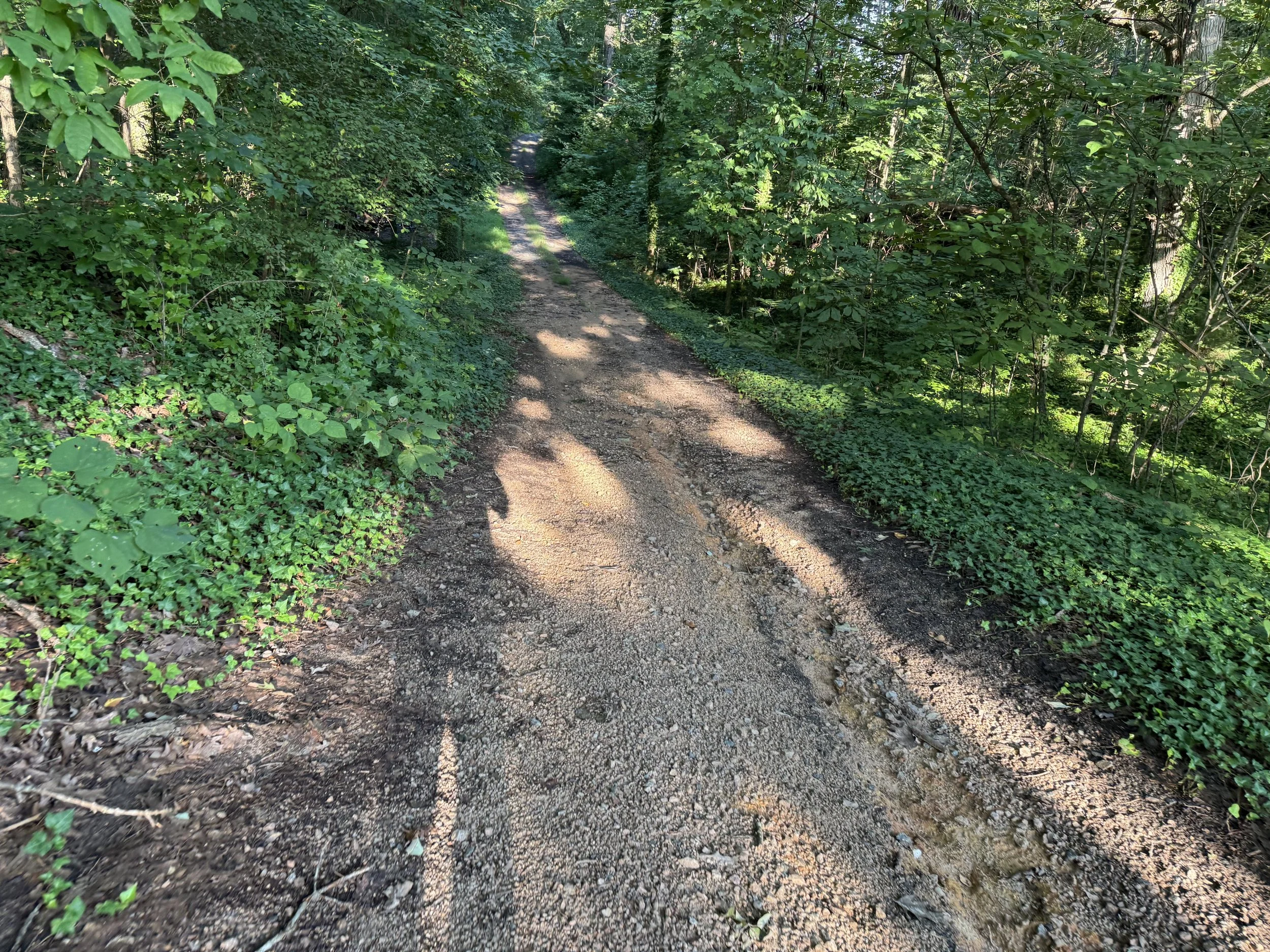
Gravel Driveway Prior to Repairs
This isn't just an inconvenience. Constant washouts damage your driveway base, create unsafe driving conditions, and waste money on gravel that ends up in your ditch instead of under your tires. The good news is that most gravel driveway runoff problems aren't caused by the gravel itself—they're caused by how water moves across and through your property.
Understanding why your driveway washes out is the first step to fixing it permanently.
The Real Reason Gravel Driveways Wash Out
Most people assume their driveway washes out because they need more gravel or a different type of stone. While gravel quality matters, the actual problem is almost always poor drainage design.
Water follows the path of least resistance. If your driveway sits in a natural drainage path, or if it's graded incorrectly, rainfall has nowhere to go except straight down the surface. When that happens, water picks up speed, gains erosive force, and carries your gravel with it.
Here in the Charlotte NC region, we deal with heavy clay soils that don't absorb water quickly. During summer thunderstorms or prolonged winter rains, that water sits on the surface and flows wherever gravity takes it. If your driveway is the low point or if it lacks proper crowning and side drainage, you're going to see washouts.
Rural properties face this even more intensely. Longer driveways, steeper slopes, and less developed drainage infrastructure mean more water volume and more opportunities for erosion.
Common Mistakes That Make Washouts Worse
Over the years, we've seen the same issues repeated across properties in Union County, Cabarrus County, and the rural areas around Charlotte. Most of these mistakes come from trying to fix symptoms instead of addressing the underlying drainage issue.
Dumping more gravel without fixing the grade. Adding stone to a poorly graded driveway is like pouring money into a hole. The next rain will wash it away again because the water flow hasn't changed.
Installing gravel directly on clay without a base layer. Clay and gravel don't bond. When the clay gets wet and soft, the gravel sinks and shifts. A proper base layer—usually compacted crusher run or dense-grade aggregate—creates a stable foundation that resists erosion and holds the top layer in place.
Ignoring the crown. A flat driveway holds water. Even a slight crown—where the center is higher than the edges—lets water sheet off to the sides instead of running straight down the middle. Without it, every rain creates a central channel that deepens over time.
Not managing uphill water. If your driveway runs downhill or crosses a natural swale, you're dealing with water that's coming from somewhere else. You can't fix that by addressing the driveway alone—you need to intercept and redirect that water before it reaches the gravel.
How Professional Grading Solves the Problem
Fixing a washout-prone driveway isn't about band-aids. It's about controlling water movement through proper rural driveway grading and drainage design.
Establishing the right slope and crown. A well-graded driveway has a gentle crown that sheds water to both sides and a longitudinal slope that moves water downhill in a controlled way—not too steep to cause erosion, and not too flat to create ponding. For most residential driveways, a cross slope of 2-3% and a maximum grade of 10-12% works well, though every site is different.
Building a proper base. Before any gravel goes down, the subgrade needs to be stable and well-compacted. A layer of crusher run or ABC stone (aggregate base course) provides a solid foundation that resists rutting and erosion. This base layer also helps with drainage by creating a semi-permeable surface that doesn't turn to mush when wet.
Adding drainage structures where needed. Sometimes grading alone isn't enough. Depending on your site, you may need ditches, culverts, or french drains to intercept water before it hits the driveway. Water bars or speed bumps placed at intervals can slow runoff on steeper sections. These features don't have to be elaborate, but they do need to be placed correctly based on how water naturally flows across your land.
Using the right gravel. Once the base and drainage are handled, the top layer matters. Crushed stone with angular edges locks together better than rounded pea gravel. A mix of stone sizes—usually ¾-inch down to fines—compacts tightly and resists washout better than uniform large stone.
North Carolina Terrain and Weather Considerations
Charlotte-area properties deal with specific challenges that make gravel driveway drainage solutions more complex than in other regions.
Our red clay soil is notorious for poor drainage. It holds water on the surface during wet periods and cracks when dry. Any driveway built directly on clay without proper preparation will shift, rut, and erode.
We also get intense rainfall in short bursts, especially during summer storms. A two-inch rain in an hour creates a lot of runoff fast. Your drainage system needs to handle peak flow, not just average conditions.
For properties with wooded lots or significant tree cover, root systems and organic debris add another layer of complexity. Leaves and sediment can clog small drainage features, so maintenance access matters.
Steeper rural properties—common in northern Mecklenburg County, southern Iredell County, and into the Lake Norman area—require more aggressive drainage solutions. A driveway that climbs 50 feet over a quarter mile needs water management at multiple points, not just at the top or bottom.
Fixing Your Driveway the Right Way
If your driveway washes out regularly, here's how to approach a permanent fix.
Start with a site evaluation. Walk your property during or right after a heavy rain and observe where water flows. Look for areas where runoff converges, where the driveway acts as a channel, and where water pools or erodes the edges.
Consider whether your driveway needs regrading or just better drainage features. If the surface is relatively flat or has reverse slopes that trap water, regrading is probably necessary. If the grade is decent but water volume is overwhelming it, adding ditches, culverts, or cross drains may be enough.
Plan for base work if your driveway has never had a proper foundation. Scraping off the old gravel, stabilizing the subgrade, and installing a compacted base layer costs more upfront but saves money over time by eliminating the need for constant gravel replacement.
Don't ignore maintenance. Even a well-built driveway needs occasional attention—filling ruts before they deepen, clearing drainage ditches, and adding a thin layer of fresh gravel every few years to maintain the surface.
When to Call a Professional
Some driveway repairs are manageable on your own, but gravel driveway drainage solutions that involve regrading, installing culverts, or addressing significant erosion are best handled by someone with the equipment and experience to get it right the first time.
Heavy equipment like excavators, dozers, and motor graders can reshape your driveway properly and install drainage features that last. Trying to do that work with a tractor or by hand often leads to mediocre results that fail during the next big rain.
If your property has complicated topography, multiple drainage issues, or a history of repeated washouts, a professional site evaluation can identify problems you might miss and recommend solutions that actually work long-term.
Keep Your Driveway Where It Belongs
A gravel driveway that washes out every time it rains isn't something you have to live with. With the right grading, a solid base, and drainage features designed for your specific property, you can have a driveway that handles North Carolina weather without constant repair costs.
If you're dealing with runoff problems on your property in the Charlotte area and want to explore gravel driveway drainage solutions that actually work, Clifford Construction Company LLC can help. We evaluate rural and semi-rural properties throughout the region and provide grading and drainage services designed to handle our local soil and weather conditions.
A site visit can tell you exactly what's causing your washout issues and what it will take to fix them permanently.